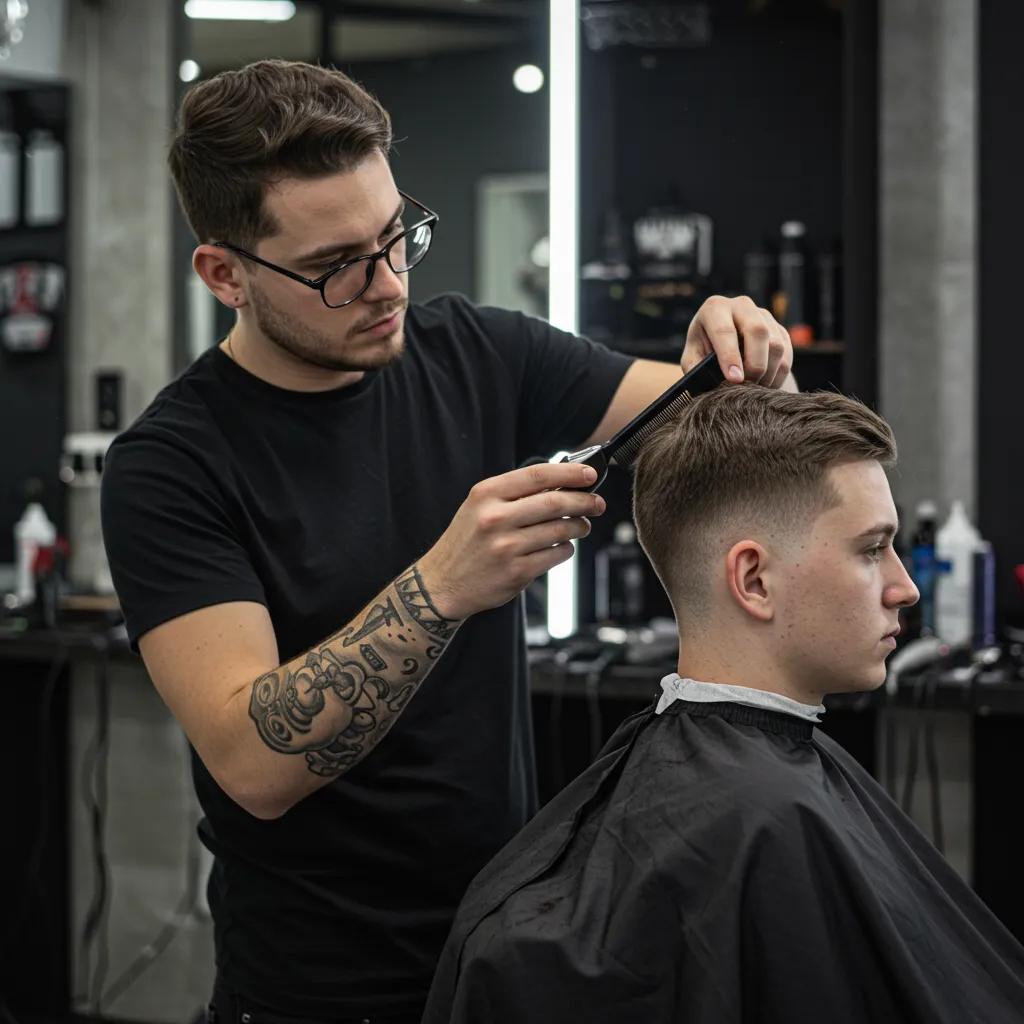
What Are the Best Skin Fade Variations?
What Are the Best Skin Fade Variations? A Complete Guide to Styles, Suitability, and Maintenance

A skin fade is a precision haircut where the hair tapers down to the skin over a controlled vertical distance, creating a clean, graduated blend that frames the head and emphasises contrast. Understanding the different skin fade variations matters because the start point, blend progression, and degree of contrast determine the overall look, maintenance needs, and how well a style complements facial features and hair texture. This guide explains the technical differences between low, mid, high, and bald fades, compares drop and burst shapes, and shows how to pair fades with top styles and beards for a seamless result. You will also find maintenance schedules, product recommendations, trend notes for 2025, and local guidance for getting expert fades in Luton. By the end, you'll know which skin fade suits your face shape and lifestyle, how to maintain it between visits, and where to get a professional cut locally.
What Are the Different Types of Skin Fade Haircuts?

A skin fade haircut is defined by where the taper meets bare skin and how quickly the blend progresses, and those two technical choices create distinct visual effects and upkeep requirements. Each variation—low, mid, high, and bald—offers a different level of contrast with the top and requires specific clipper grades and blending techniques to achieve a clean finish. Understanding these types helps you choose a style that complements your hair density, growth patterns, and desired maintenance rhythm. The variations below describe start points, typical pairings, and practical considerations so you can visualise how each will read on your head and in everyday life.
What Defines a Low Skin Fade and Its Key Features?
A low skin fade starts just above the ear or at the temple and blends subtly into longer hair on the side and back, producing a restrained contrast that suits conservative or classic looks. This style favours a gentle taper where clipper grades progress quickly from skin to longer lengths, making it forgiving on uneven hairlines and ideal for straight or slightly textured hair. Low skin fades pair well with longer tops—such as textured crops or quiffs—because they maintain fullness above the ear while keeping the silhouette tidy. For maintenance, expect light touch-ups every two to four weeks to preserve the clean edge without frequent full reshaping, and ask your barber for soft clipper grades to keep the blend seamless.
How Does a Mid Skin Fade Differ from Other Fades?
A mid skin fade begins roughly at the midpoint between the ear and the temple, creating more contrast than a low fade while remaining versatile and widely flattering across face shapes. The mid fade provides a balanced frame that emphasises shape without committing to the boldness of a high fade, making it a popular choice for textured crops, pompadours, and tapered styles. Barbers typically use a stepped range of clipper guards to craft a visible yet well-blended transition, which suits most hair densities including wavy textures. Maintenance is moderate—trims every two to three weeks help the fade hold its definition while allowing the top to grow into styling shapes between visits.
What Makes the High Skin Fade Stand Out?
A high skin fade starts higher on the head, often above the temple line, and generates sharp contrast between shaved sides and longer top lengths, resulting in a bold, contemporary aesthetic. This fade suits clients who want a dramatic, fashion-forward look or who pair their fade with highly textured or voluminous top styles like pompadours and disconnected undercuts. Achieving a crisp high fade demands precision blending and often a razor or zero-guard finish at the shortest point to ensure a flawless skin-to-hair transition. Because contrast is prominent, high skin fades require more frequent upkeep—typically every one to three weeks—to maintain the intended sharpness and outline.
What Is a Bald Fade and How Is It Unique?
A bald fade takes the taper to true skin using clippers or a straight razor to achieve a completely shaved base, producing an ultra-clean finish and maximum contrast with the remaining hair. This technique differs from other skin fades because it intentionally exposes bare scalp at the shortest point, which suits short top styles such as buzz cuts or very short crops and creates a striking, low-profile result. Barbers must work carefully to avoid irritation and to manage skin sensitivity where blades meet the scalp; clients should follow aftercare advice to prevent razor burn. Bald fades are low on styling effort but high on maintenance for the shaved area, requiring regular removals of regrowth to keep the silhouette crisp.
How Do Drop and Burst Fades Compare to Classic Skin Fades?
Drop and burst fades alter the fade's shape to follow the ear or create an arched profile, changing the haircut's visual flow while using the same skin-to-long blending principles as classic fades. A drop fade curves down behind the ear, elongating the head shape and pairing well with mohawks or angular top styles, whereas a burst fade radiates around the ear in a semicircular pattern often used with textured or layered cuts. These shaped fades allow barbers to customise balance and silhouette, offering stylistic variation without changing the underlying technique of a skin fade. Choosing a drop or burst fade adds character and can be used to complement face shape or to enhance a particular top style.
Different skin fade types are best compared side-by-side to choose the right start height and maintenance level.
Fade Type
Start Point
Visual Effect
Low Skin Fade
Just above ear/temple
Subtle contrast; classic look
Mid Skin Fade
Midpoint between ear and temple
Balanced contrast; versatile
High Skin Fade
Above the temple line
Bold contrast; modern silhouette
Bald Fade
Skin-to-zero at shortest point
Ultra-clean; maximum contrast
How Do You Choose the Best Skin Fade for Your Face Shape and Hair Type?
Choosing a skin fade depends first on face shape and second on hair texture: the starting height and contrast should enhance your natural proportions while the barber's technique must respect your hair's movement and density. For example, higher fades increase jawline emphasis on angular faces, while lower fades preserve visual weight for round faces. Hair type dictates clipper strategy and top style pairing—curly hair benefits from more gradual blending to avoid stepped lines, whereas straight hair can carry sharper transitions. Lifestyle and maintenance tolerance complete the decision matrix: pick a fade you can reasonably upkeep between barber visits to keep the look intentional.
Which Skin Fade Styles Suit Oval, Square, and Round Face Shapes Best?
Face-shape mapping helps simplify choices: oval faces are versatile and handle low to high fades, square faces often benefit from mid or high fades that accentuate angles, and round faces usually need higher contrast or structured top length to create perceived length. These guidelines provide a starting point, but proportions and hairline specifics can change the recommendation, which is why consultation with a skilled barber is valuable. Consider the top style you want—longer height on top can elongate a round face while a shorter top complements an already angular square face. Visiting a professional lets you preview how the fade will balance features before committing to a start height.
Can Skin Fades Work with Curly, Straight, or Textured Hair?
Skin fades work across textures but require tailored technique: curly and highly textured hair demand careful clipper angle and slower blending to avoid visible steps, while straight hair allows for sharper graduations and more pronounced contrast. Barbers may use different guard progressions, clipper tilting, and scissor-over-comb to achieve the desired blend depending on density and curl pattern. Styling considerations also change—textured tops often need light creams or sea salt sprays to define shape, whereas straight hair may rely on pomades for structure. Knowing how your hair behaves after a shower and during daily activity helps pick a fade that remains flattering with routine styling.
What Are the Benefits of Choosing a Skin Fade Based on Your Lifestyle?
Matching a fade to your lifestyle balances aesthetics with practical upkeep: busy professionals may prefer low or mid fades for lower-maintenance outlines, while active clients often choose shorter fades to reduce sweat and styling fuss. Social or creative workers might opt for higher fades or burst/drop shapes to express individuality, accepting more frequent trims to keep the look crisp. Consider time for styling and frequency of barber visits—shorter, sharper fades demand weekly to biweekly upkeep, while softer fades can stretch to three or four weeks. Choosing a fade that fits how you live ensures you can maintain the intended appearance without frustration.
Below is a quick mapping that summarises face shapes and recommended fades.
Face Shape
Recommended Fade
Reason
Oval
Low to High
Proportionally balanced; versatile
Square
Mid or High
Accentuates jawline and angles
Round
High or Bald
Adds height and perceived angularity
How Can You Combine Skin Fades with Beard Styles for a Seamless Look?

Combining a skin fade with a beard creates a continuous, groomed frame that enhances jaw definition and balances proportions when executed with matched transition points and consistent line work. A successful beard-fade blend uses graduated clipper settings and tapering to move smoothly from scalp to beard, avoiding abrupt steps that distract from overall symmetry. The right beard style depends on face shape, beard density, and how bold you want the frame to be—short stubble blends provide subtle definition, while fuller beard fades create a stronger contour. Proper at-home maintenance and occasional barber shaping keep the blend clean and purposeful between cuts.
What Are the Most Popular Beard Fade Styles Paired with Skin Fades?
Common pairings include a gradual beard fade into a short, tapered cheek; a disconnected look where the hair fade contrasts a longer beard; and a stubble fade that keeps a crisp, low-profile finish. These approaches vary in transition length and contouring: stubble fades are forgiving and low-maintenance, while fuller beard blends require more careful trimming and shaping to maintain proportional lines. Barbers often recommend keeping the beard length consistent with the top's visual weight—lighter tops with heavier beards can feel unbalanced. Choosing the right beard fade depends on growth pattern and how much maintenance you're prepared to do.
Popular beard-fade pairing: stubble fade into a low skin fade for subtlety.
Popular beard-fade pairing: tapered beard with mid fade for balanced definition.
Popular beard-fade pairing: full beard with fade at the temples for dramatic contour.
These pairings highlight practical options for different preferences. After selecting a beard-fade pairing, regular touch-ups at the barber will prevent mismatched regrowth lines and preserve the intended framing.
How Does a Beard Fade Enhance Jawline and Facial Features?
A beard fade sculpts the lower face by creating shadow and contrast where desired, which visually sharpens the jawline and can reduce the appearance of a double chin or soft cheeks. Length and angle are the main tools—shorter tapered sides and a slightly fuller length along the jaw emphasise structure, while a trimmed neckline and clean cheek lines keep the effect crisp. Barbers adjust taper angles to work with natural bone structure and hair growth direction, enhancing strengths and masking asymmetries. Regular maintenance prevents the beard from losing its contour and ensures the fade remains complementary to the haircut.
What Styling Tips Help Maintain Skin Fade and Beard Blends?
Daily grooming routines, correct tools, and a small selection of products keep fades and beard blends looking polished between barber visits; essential steps include gentle cleansing, light moisturising of the shaved areas, and using a trimmer for minor perimeter tidying. For the beard, a boar-bristle brush and beard oil help distribute natural oils and maintain softness without flattening shape, while the top benefits from a paste or clay to add texture without greasiness. Avoid aggressive home blade work which can create uneven lines; instead, use controlled, conservative trims to delay a full shop visit. Knowing when to return to the barber—typically every one to three weeks depending on contrast—keeps the blend intentional.
What Are the Best Styling and Maintenance Practices for Skin Fades?
Maintaining a skin fade requires a routine that protects skin where blades meet the scalp, preserves the fade line, and supports the chosen top style with suitable products. Regular trimming intervals, targeted skin care, and the right styling formulations combine to keep a fade sharp without frequent overcutting. Barbers recommend specific product types by hair texture and desired finish, and they can teach light at-home touch-ups to extend the life of a cut. The guidance below includes interval recommendations, daily care steps, and product comparisons to help you plan an effective maintenance regimen.
How Often Should You Get a Skin Fade Trim to Keep It Sharp?
For most skin fades, a trim every two to three weeks maintains the intended contrast and outline; high and bald fades often need weekly to fortnightly attention, while low fades may stretch to three or four weeks depending on growth rate. Factors that influence frequency include hair growth speed, fade height, and how clean you want the edge to remain in professional or social settings. If you're combining a fade with a beard, synchronising barber visits prevents mismatched regrowth that undermines the blend. Discussing expectations with your barber helps establish a personalised schedule that balances appearance and time.
Trim high/bald fades: every 1–2 weeks for crispness.
Trim mid fades: every 2–3 weeks for balanced upkeep.
Trim low fades: every 3–4 weeks for a softer silhouette.
These timelines serve as practical starting points; you can adjust based on how quickly your hair grows and how sharp you prefer the look.
What At-Home Care Tips Help Maintain Skin Fade Quality?
A simple at-home routine preserves the fade between visits: cleanse the scalp and skin-facing areas gently, moisturise shaved skin to prevent dryness or irritation, and use a small trimmer to neaten the perimeter without redoing the fade. For the top, apply appropriate styling products to maintain shape—light creams for movement, clays for matte texture, and pomades for shine—and use a comb or fingers to refresh the intended silhouette each morning. Avoid over-washing textured tops which can strip natural oils; instead, use a light conditioner or a dry shampoo to manage oil and volume. Finally, protect the scalp from sun exposure where skin is bare to reduce irritation and fading of the hairline.
Which Styling Products Work Best with Different Skin Fade Variations?
Product choice depends on hair type and the target finish: clays and mattes suit thick, textured tops for structure without shine; light creams and sea-salt sprays enhance movement in fine or wavy hair; pomades provide hold and sheen for slicked or classic finishes. Understanding each product's effect—hold level, finish, and reworkability—helps you match formulation to daily routine and desired look. The table below compares common product categories and their best applications, offering a quick reference for selecting styling aids that complement a skin fade.
Product Type
Hair Type Suited
Effect
Clay
Thick/curly
Strong hold, matte finish
Sea-salt spray
Fine/wavy
Texture and volume
Pomade
Straight/slick styles
Hold with shine
How Do Skin Fades Compare to Other Popular Fade Styles Like Taper Fades?
Skin fades and taper fades belong to the same family of tapered haircuts but differ in how short the hair goes at the shortest point and in overall visual contrast; a skin fade reaches bare skin while a taper leaves short hair at the neckline and around the ears. This technical difference yields separate aesthetics and maintenance demands: tapers are subtler and often more suitable for conservative settings, whereas skin fades provide stronger shaping and a more contemporary appearance. Drop and burst fades are shape variations that sit alongside both approaches, offering customised contours without changing the fundamental tapering technique.
What Is the Difference Between a Skin Fade and a Taper Fade?
A skin fade is defined by a transition that reaches bare skin at the shortest point, producing maximum contrast and a sharp outline, while a taper fade leaves a short but visible length at the shortest point, creating a softer, more gradual finish. This distinction affects formality and upkeep: tapers read as more natural and require less frequent shaving, whereas skin fades demand closer maintenance to preserve the shaved boundary. For clients with sensitive skin, a taper may reduce irritation risk by avoiding repeated close shaves. Choosing between the two depends on the desired contrast, maintenance tolerance, and professional context.
When Should You Choose a Taper Fade Over a Skin Fade?
Choose a taper fade when you want a refined, understated look that needs less frequent intervention or when skin sensitivity and workplace norms favour a softer outline. Tapers are ideal for those who prefer a low-maintenance profile that still looks neat and for clients who want a gradual framing without the commitment of frequent shaving to skin. They also suit classic or vintage styles where a completely shaved edge would feel out of place. If you value subtlety and a longer interval between visits, a taper fade is usually the more practical option.
How Do Drop and Burst Fades Fit into the Fade Style Spectrum?
Drop and burst fades introduce curvature and directional shaping to the fade, creating more dynamic lines that emphasise or elongate head shape depending on placement. These variations are stylistic options that work with both skin and taper fades, enabling a customised silhouette that complements top style choices such as mohawks, undercuts, or textured crops. Choosing these shapes is a creative decision best made with a barber who can preview how the curve will sit relative to your ear and jaw. When used thoughtfully, shaped fades enhance individuality while preserving the technical benefits of a well-executed taper or skin fade.
What Are the Latest Skin Fade Trends for 2025?
The 2025 landscape shows strong demand for textured tops paired with precise skin fades, creative line work, and hybrid approaches that merge classic cuts with modern texture. Barbers are combining controlled contrast with lived-in tops—textured crops, loose pompadours, and layered fringe—to achieve styles that read contemporary yet wearable. Line designs and subtle geometric detailing continue to be popular as personalisation options, but the most enduring trends centre on blending techniques and hair health to make fades last longer and look sharper. Regional preferences vary, and local barber expertise shapes how trends are interpreted for everyday wear.
Which Skin Fade Variations Are Trending in Luton and the UK?
In Luton and across the UK, mid and low skin fades paired with textured crops and layered tops are commonly requested because they balance modern style with practicality for daily life. Clients often ask for natural texture on top with a clean, tapered side that reads fashionable but not extreme, reflecting local demand for adaptable looks that suit work and social settings. Drop and burst fades are also popular for clients seeking subtle differentiation without sacrificing overall neatness. Barbers in the area are responding with techniques that preserve hair health while delivering the contemporary finishes customers want.
How Are Barbers Combining Skin Fades with Textured and Creative Cuts?
Barbers combine layering, point-cutting, and short-length texturising on top with precise skin blending at the sides to produce hybrid styles that feel modern and low-effort. The key is harmony: texture on top should complement the fade's contrast so that movement reads intentional rather than messy, and barbers often finish with tailored product recommendations to enhance the chosen texture. Creative cuts may include asymmetric fringe, disconnected undercuts, or subtle line designs; each requires thoughtful planning of where the fade begins to ensure a cohesive overall shape. These hybrid techniques allow clients to express individuality while keeping the silhouette wearable.
What Role Do Line Designs and Artistic Details Play in Modern Skin Fades?
Line designs and artistic details provide visual punctuation within a fade, drawing attention to angles or adding an element of bespoke styling without altering the haircut's core structure. Placement and complexity should match lifestyle and maintenance tolerance—simple single lines hold up better between visits, while intricate patterns need more frequent touch-ups. Barbers consider head shape and growth pattern when etching designs to ensure longevity and symmetry. When used sparingly, line work can elevate a skin fade from standard to signature while still allowing easy revert to a plain fade when desired.
Where Can You Get Expert Skin Fade Haircuts in Luton?
If you're seeking professional skin fades in Luton, Barber Group operates locally with an emphasis on quality hairdressing, precise cuts, and a welcoming environment that suits a wide range of customers. The business functions as an information hub and lead generation point for clients looking for skin fades in Luton, offering services commonly paired with beard shaping, hot towel shaves, straight razor head shaves, and children's haircuts. Convenience is a focus—appointments are preferred and walk-ins are welcome—so you can book a slot or drop in to discuss the right fade for your hair type and lifestyle. Barber Group positions itself as the barber Luton trusts for professional results and also shares opportunities for those interested in joining their team.
Why Choose Barber Group for Your Skin Fade in Luton?
Barber Group highlights several customer-facing benefits: professional barbers who deliver precision cuts, a clean and stylish salon environment, and convenience through appointment options and walk-in acceptance. Their comprehensive service range—covering skin fades, beard shaping, hot towel shaves, and straight razor head shaves—means clients can choose integrated grooming solutions in one visit. Local trust and a welcoming atmosphere help clients feel confident about trying new fade variations or bespoke designs. For readers seeking a reliable local provider, Barber Group represents a practical option for both standard fades and creative, modern looks.
How to Book Your Skin Fade Appointment or Walk-In Visit?
Booking is straightforward: clients may prefer to schedule an appointment to secure a specific barber and time, though walk-ins are welcome for those who need flexibility or same-day service. When preparing for a visit, bring reference photos of the fade variation and any preferred top styling, and be ready to discuss maintenance expectations so the barber can recommend a tailored trimming schedule. A short consultation during the appointment ensures the barber understands hair texture, growth patterns, and any skin sensitivity that may affect technique. Ask about combined services—such as beard shaping or a hot towel finish—to create a complete grooming session that aligns with your goals.
What Do Customers Say About Their Skin Fade Experience at Barber Group?
Customers commonly praise precise barbering, a welcoming atmosphere, and the convenience of combined services that let them get a fade and beard shape in one appointment, creating a cohesive finished look. Feedback themes centre on quality hairdressing, professional staff, and ease of booking or walking in for service. Prospective clients are encouraged to view local reviews and testimonials to verify experience and results, and to request a consultation if they have unique hair or styling needs. Barber Group also welcomes enquiries from barbers and stylists interested in career opportunities, reflecting its dual role as a local service provider and a place that attracts industry talent.
This article has covered the main skin fade variations, guidance for choosing styles by face shape and hair type, beard pairings, maintenance practices, and 2025 trends—with specific local guidance for getting expert fades in Luton at Barber Group. If you're ready to refine your look, consider a consult to map the right fade height, blend style, and maintenance plan for your lifestyle.
Frequently Asked Questions
What is the best way to maintain a skin fade at home?
To maintain a skin fade at home, establish a simple routine that includes gentle cleansing of the scalp and skin areas, moisturising to prevent dryness, and using a trimmer for minor touch-ups around the edges. For the top, apply suitable styling products to keep the desired shape—light creams for movement or pomades for a slick finish. Avoid over-washing, as this can strip natural oils. Regularly check for uneven growth and schedule barber visits every two to three weeks to keep the fade looking sharp.
How can I communicate my desired skin fade style to my barber?
When visiting your barber, bring reference photos that illustrate the specific skin fade style you want. Clearly describe the fade height, the desired contrast, and any top styles you wish to pair with it. Discuss your hair type and growth patterns, as well as any maintenance preferences you have. A good barber will appreciate your input and can provide professional advice to ensure the final look aligns with your vision while considering your hair's unique characteristics.
Are there any skin fade styles that are more suitable for formal occasions?
Yes, for formal occasions, low and mid skin fades are often more suitable as they provide a polished and understated look. These styles maintain a clean appearance without being overly dramatic, making them ideal for professional settings or formal events. Pairing these fades with classic hairstyles, such as a slicked-back look or a neatly styled quiff, can enhance the overall sophistication. Always consult with your barber to ensure the chosen style aligns with the formality of the occasion.
What should I consider when choosing a skin fade for a special event?
When selecting a skin fade for a special event, consider the event's formality, your outfit, and how the fade complements your face shape. Opt for a style that enhances your features and fits the occasion—low fades for subtlety or high fades for a bolder statement. Additionally, think about maintenance; ensure you have enough time for touch-ups before the event. Discuss your options with your barber to find a style that balances your personal aesthetic with the event's atmosphere.
Can I combine a skin fade with other haircut styles?
Absolutely! Skin fades can be combined with various haircut styles, such as textured crops, pompadours, or undercuts, to create a unique look. The key is to ensure that the top style complements the fade's contrast and shape. For instance, pairing a high skin fade with a voluminous top can create a striking appearance, while a low fade with a longer top offers a more subtle effect. Consult your barber for tailored advice on how to achieve a cohesive and stylish combination.
What are the common mistakes to avoid when getting a skin fade?
Common mistakes to avoid when getting a skin fade include not clearly communicating your desired style to the barber, which can lead to unsatisfactory results. Additionally, neglecting to consider your face shape and hair type may result in a fade that doesn't suit you. It's also important to avoid over-styling or using the wrong products, as this can affect the fade's appearance. Lastly, ensure you schedule regular maintenance visits to keep the fade looking fresh and intentional.
How do I choose the right barber for a skin fade?
Choosing the right barber for a skin fade involves researching local barbershops, reading reviews, and looking at their portfolio of work. Seek recommendations from friends or family who have had good experiences. A skilled barber should be knowledgeable about different fade styles and how they suit various hair types and face shapes. During your first visit, discuss your desired style and gauge their understanding and expertise. A good rapport with your barber can also enhance your overall experience.
Conclusion
Choosing the right skin fade can significantly enhance your overall appearance, providing a tailored look that complements your face shape and hair type. With various styles available, from low to high fades, you can find a perfect match that suits your lifestyle and maintenance preferences. Don't hesitate to visit Barber Group for expert advice and a professional cut that meets your grooming needs. Book your appointment today and step into a new level of style.
